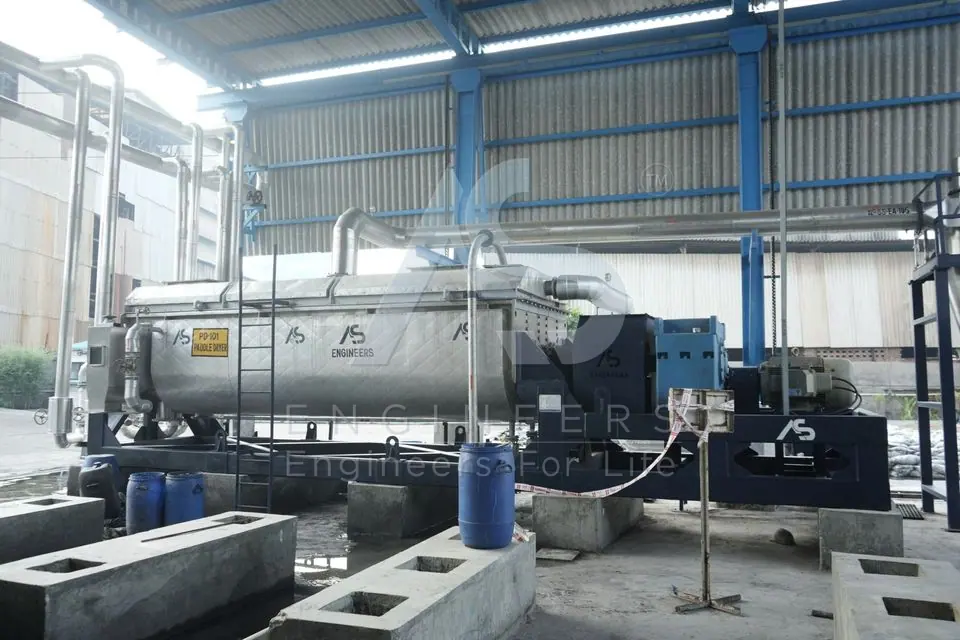
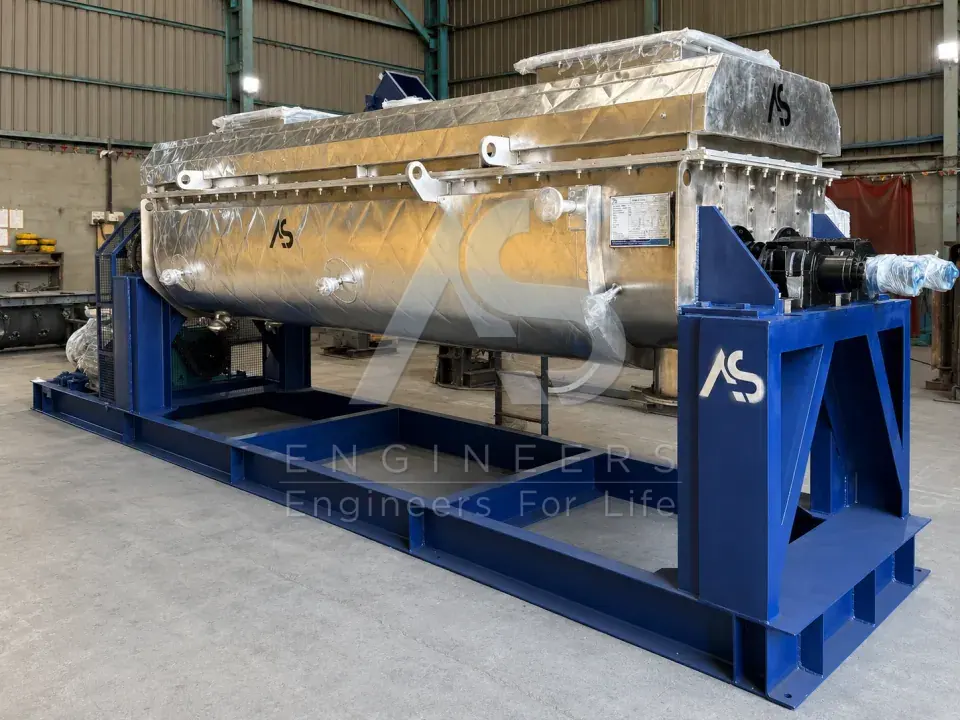
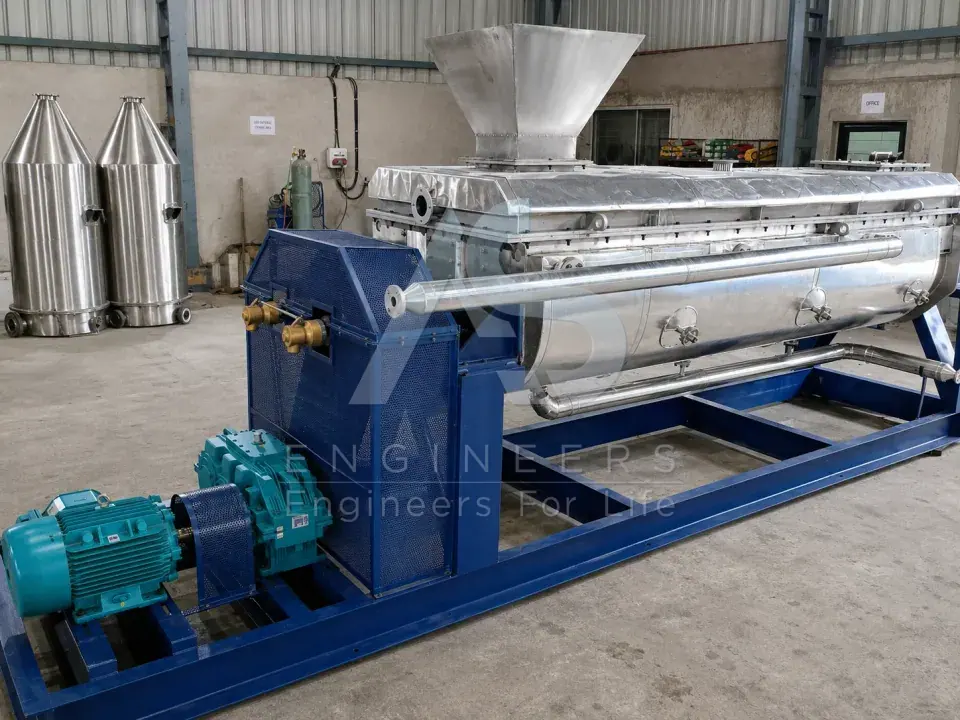
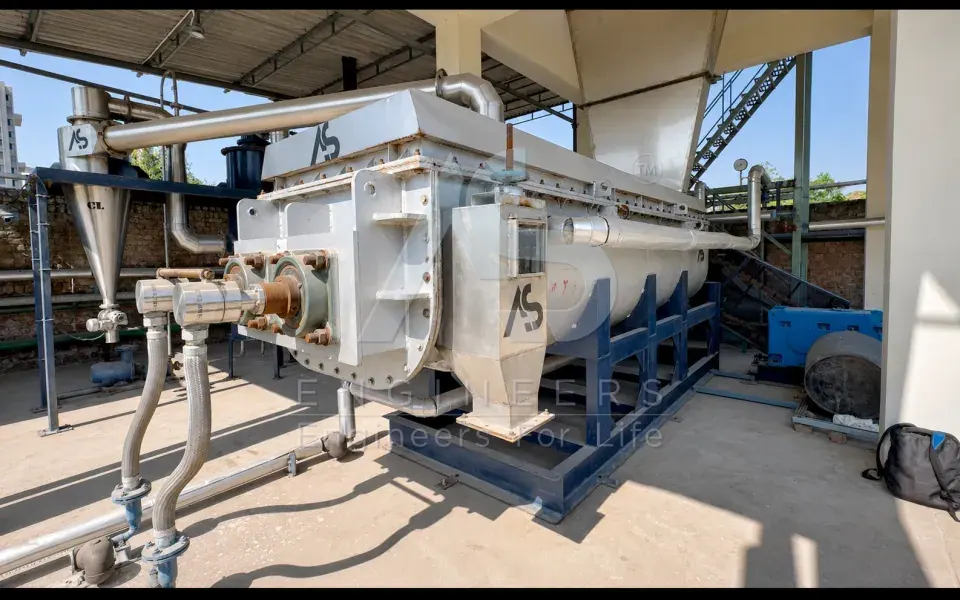
Paddle dryer manufacturer since 1997 · ISO 9001:2015 & CE certifiedPilot trials on your own sludge – fee waived on orderMade in India · dispatched across India & exported1500+ projects · 500+ clients · 500+ dryers of all kinds running today
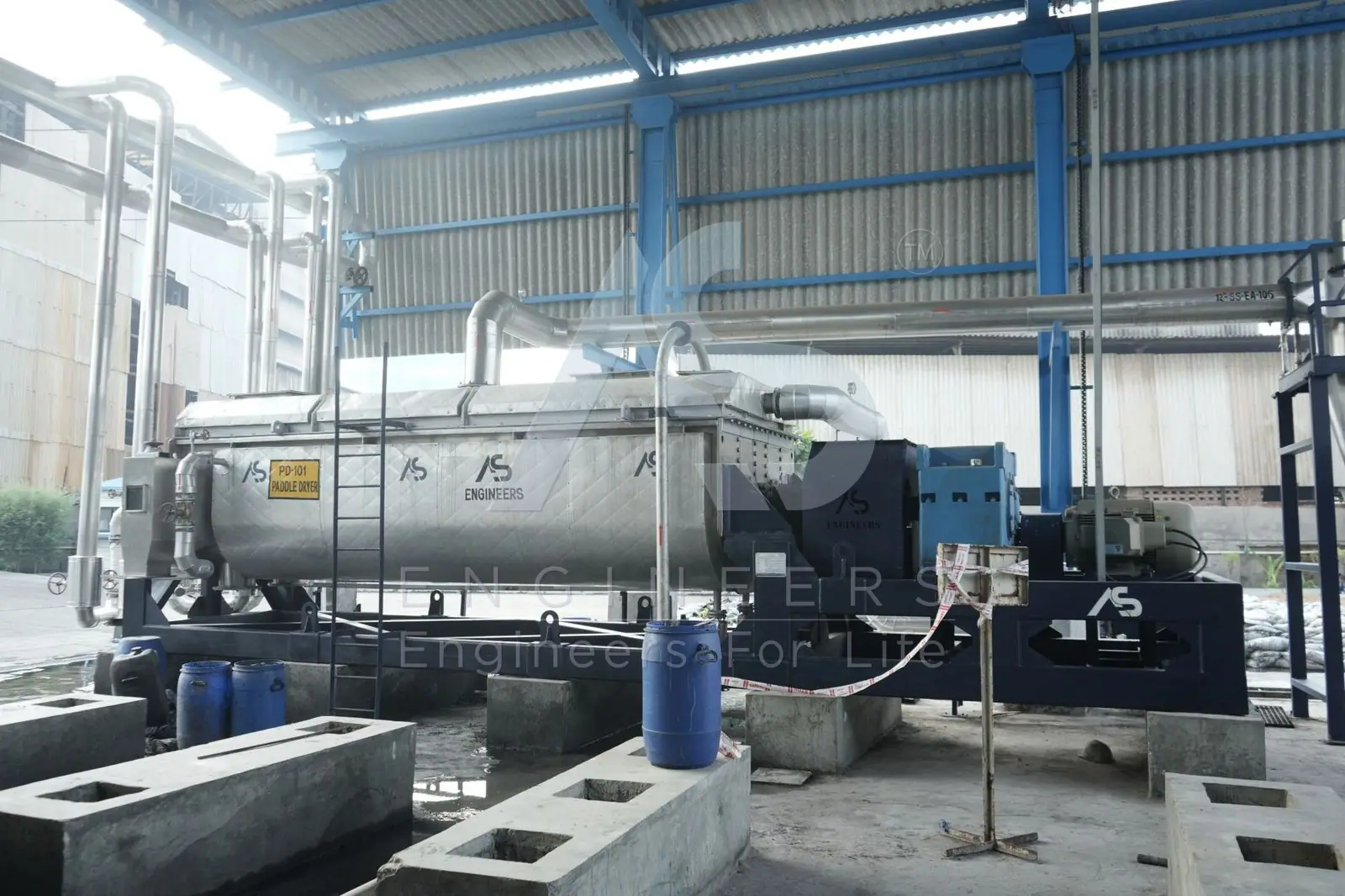
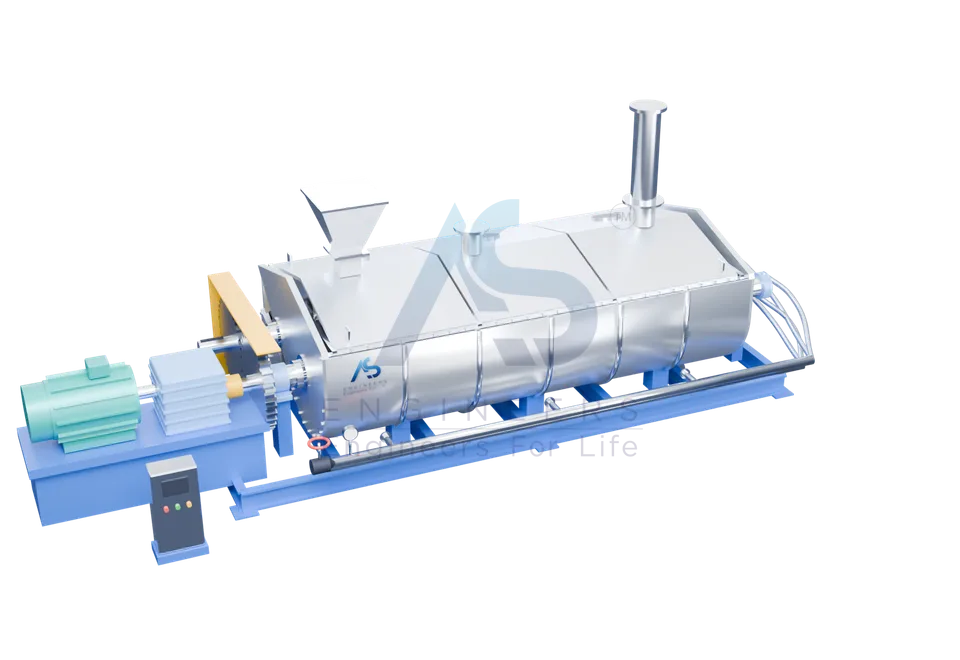
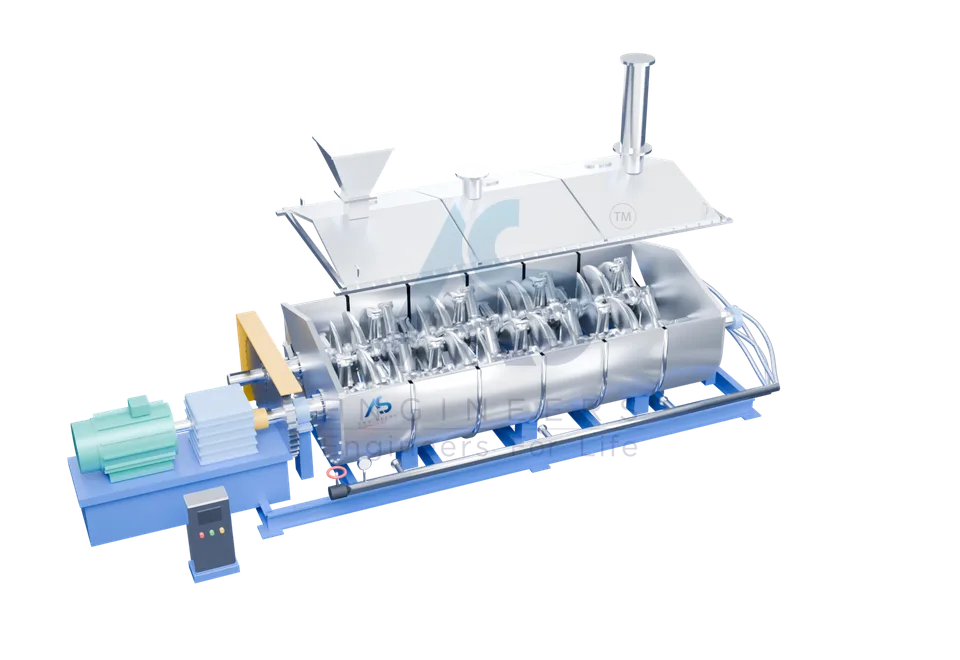
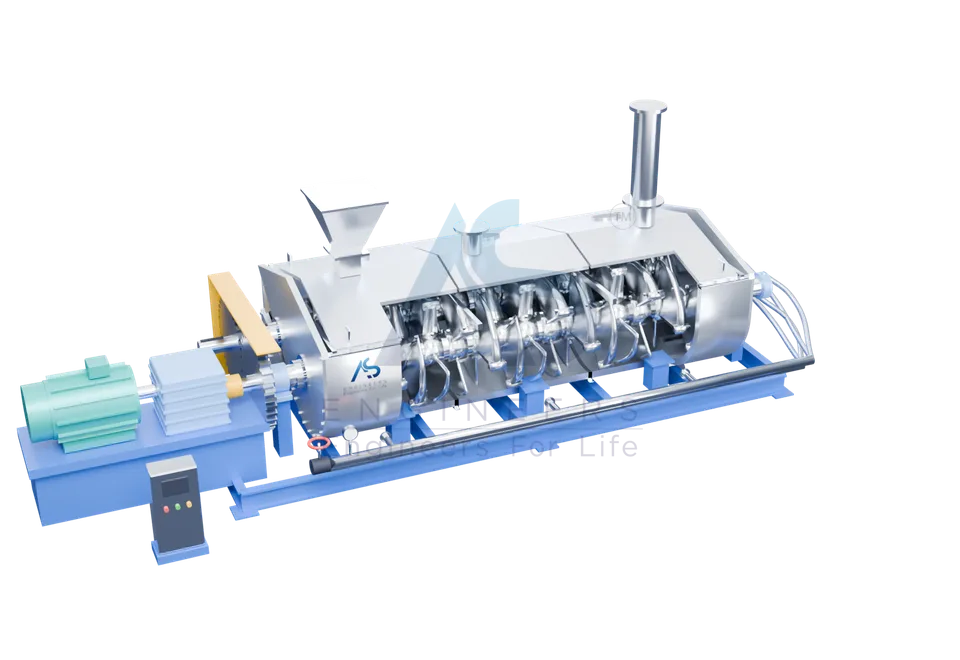
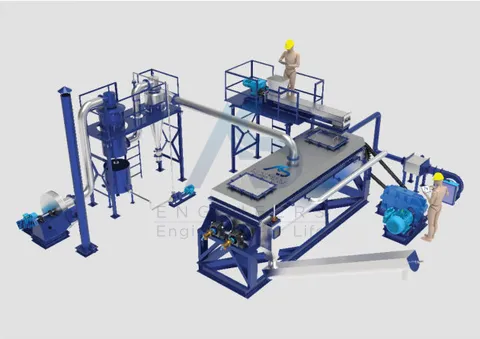
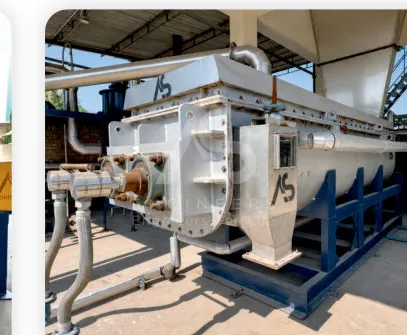
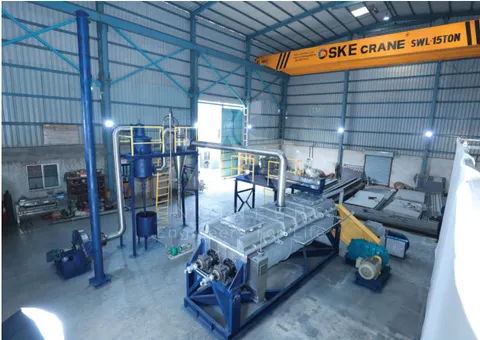
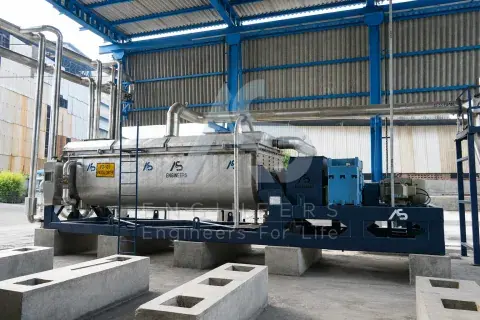
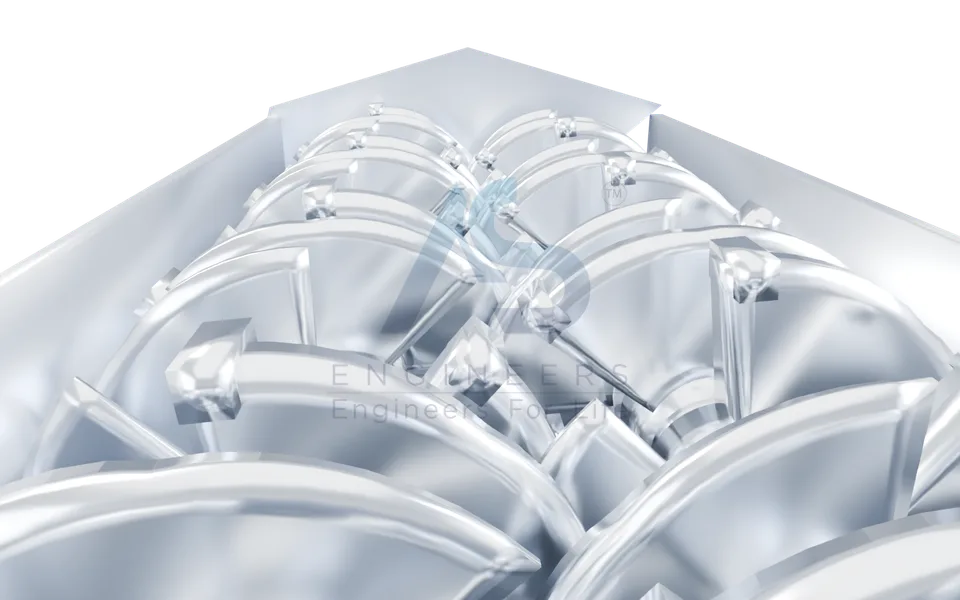
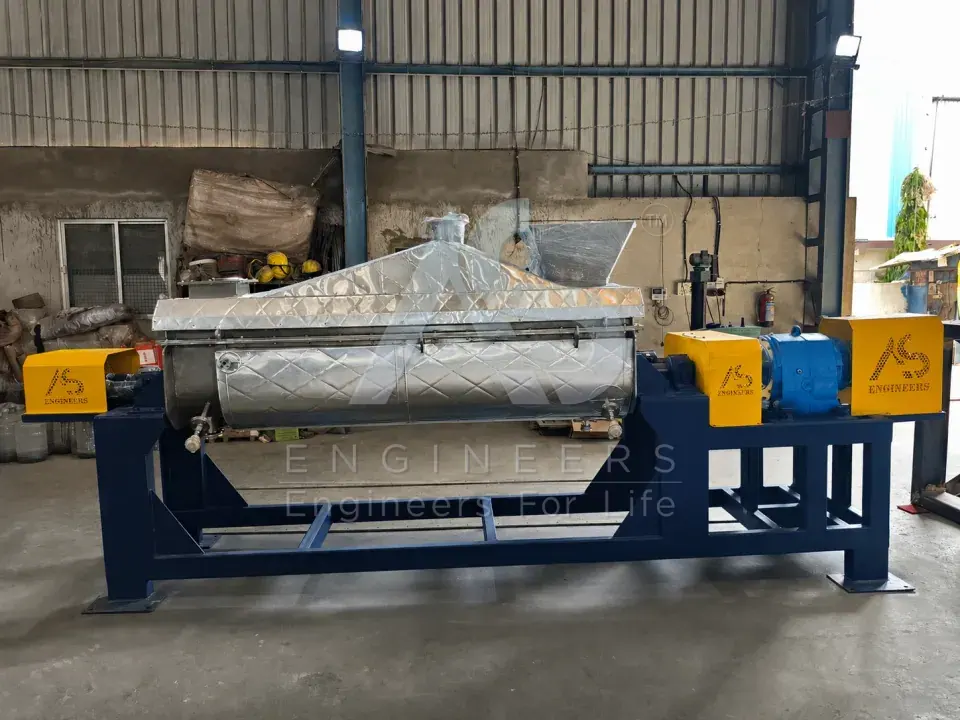
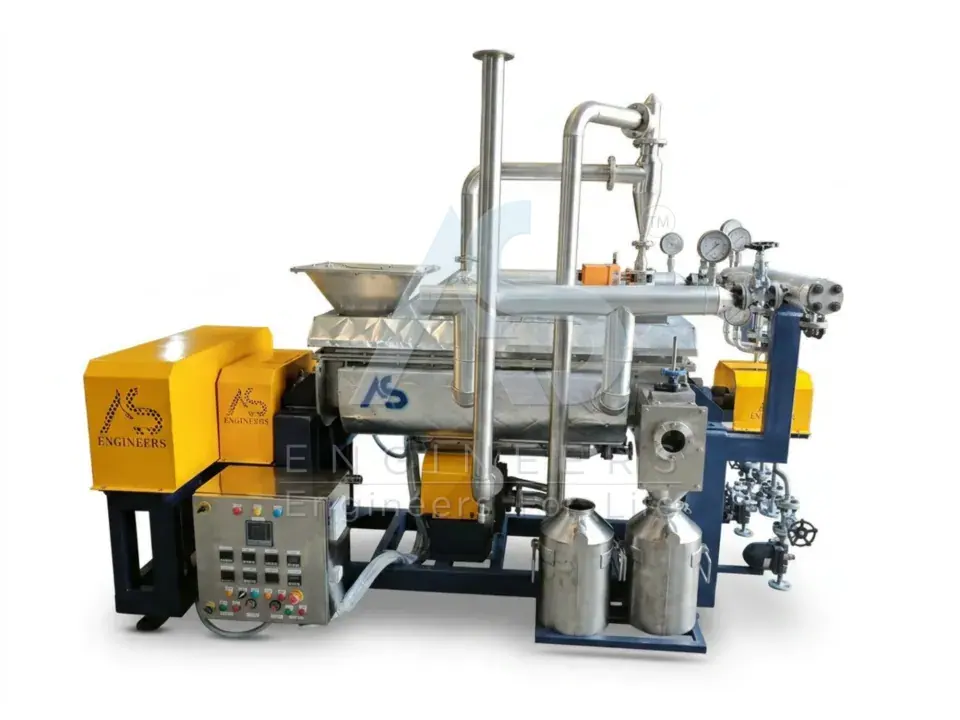
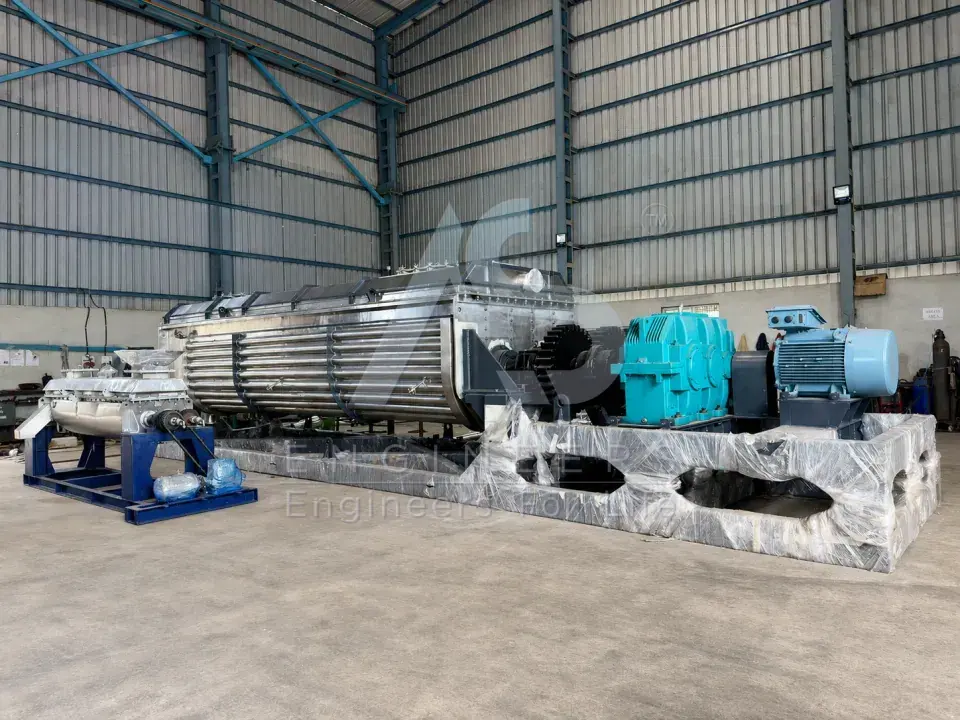
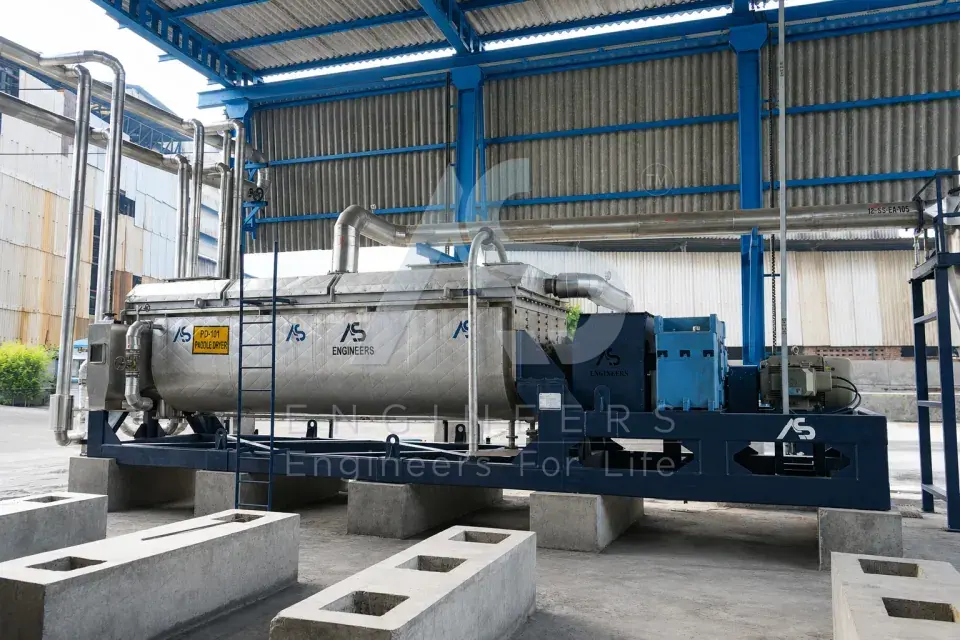
Our paddle dryer dries wet, sticky and heat-sensitive material without ever letting the heating medium touch it. Two hollow shafts carry hollow wedge blades through a jacketed W-trough. Steam, thermic fluid or hot water flows through all three – shafts, blades and jacket – so the machine packs a large heating surface into a small footprint.
Cleans itself as it turns
Runs at atmospheric pressure, under vacuum or under pressure
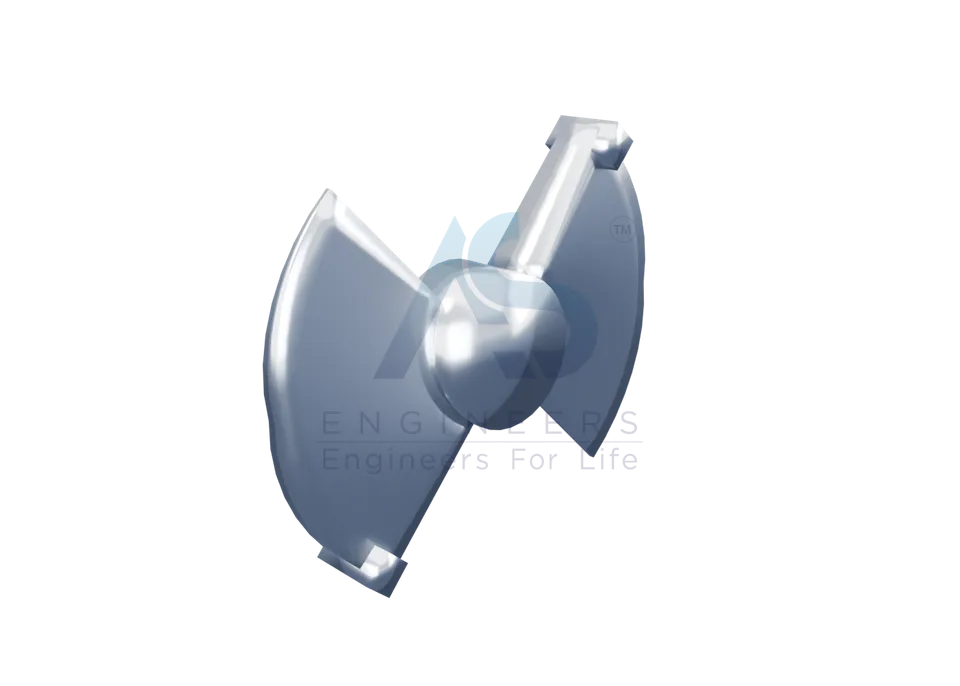
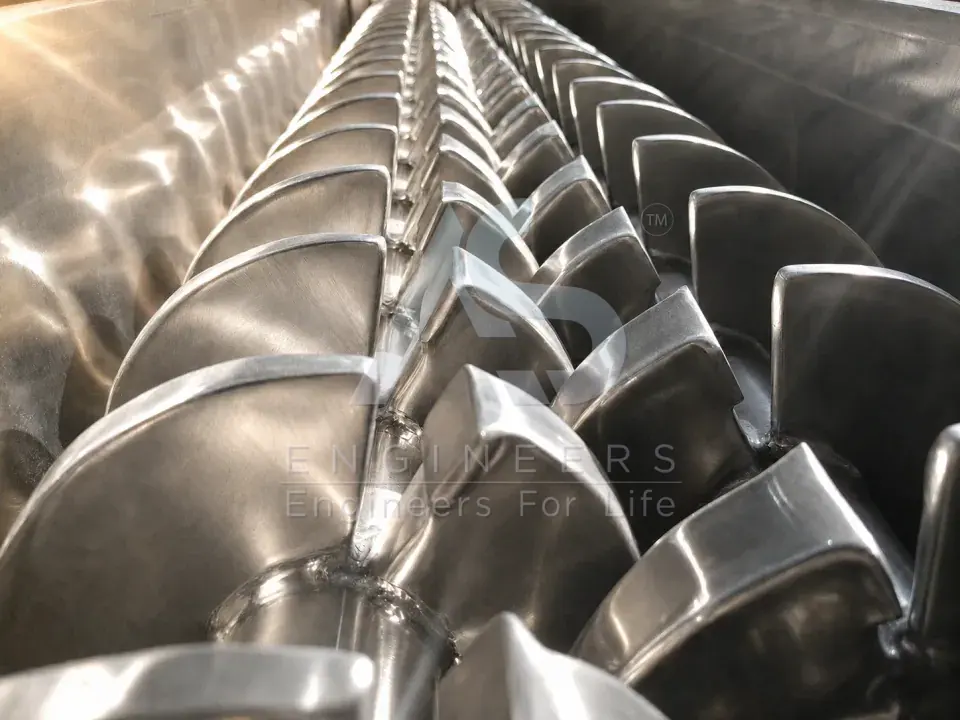
Every shaft carries pairs of hollow wedge blades. Heat flows inside them, so each blade is a heating surface as well as a mixer.
1
Hollow shaftLarge-bore shaft – steam or thermic fluid flows inside.
2
Two blades, 180° apartEach station sits 45° on from the last, forming a helix.
3
Scraper blocksSquare blocks on the rim wipe the trough wall – no crusting.
4
Wedge profileThin leading edge cuts in, thick trailing edge squeezes and releases – heated from inside.
Section through one blade: hollow, heated from inside, thin where it cuts in and thick where it squeezes.Each station turns 45° on from the last – together they form a helix that moves the bed to the outlet.
How it works
Two hollow shafts. Turning together. Cleaning each other.
Feed
Wet cake drops into the hopper. The feeder spreads it evenly along the trough.
Heat
Steam, thermic fluid or hot water flows inside the hollow shafts, blades and jacket. Heat reaches your sludge through steel – the heating medium never touches it.
Knead & move
The two shafts turn in opposite directions. The wedge blades sweep the cake up between them, break the lumps into smaller pieces, wipe each other clean and push the bed forward.
Vent
A small purge stream carries the water vapour to a cyclone and scrubber.
Discharge
Dry granules and powder drop out at the far end – ready to burn, sell or dispose of at a fraction of the weight.
Wet cake drops inHeat through steelBlades lift & break lumpsVapour outDry granules move on to the outlet
~80%
Wet cake
Dark, heavy, sticky lumps enter the hopper.
~60%
Plastic phase
Heat softens it; paddles knead and stretch.
~35%
Shearing phase
Paddles shear the mass into crumbs.
1–20%
Dry granules + powder
Free-flowing granules and fines discharge.
Illustrative moisture along the dryer. Dried output goes to fuel · cement kilns · bricks · agriculture.
At a glance
The numbers engineers ask for
40–85%Inlet moisturewet cake, paste, slurry-fed
5–15%Outlet moisturedown to 1–2% for special duties
14.06kg/cm² steamor hot water
400°CThermic fluidindirect, uniform heat
SS 316Duplex 2205 · SS 304for corrosive & hygienic duty
3 typesStandard · Dual-zone · Vacuumbuilt to process
25 kg/hrPilot dryerat your site or ours
Why plants choose paddle drying
Built to run for decades
Cleans itself
The wedge blades scrape each other and the trough wall. Sticky sludge does not build up.
Costs less to run
Indirect heat and a tiny exhaust stream keep your fuel and treatment bill low.
Rarely stops
Slow, heavy shafts and no metal-to-metal contact mean long life and short shutdowns.
Fits your plant
A compact, skid-mounted body slides into new or existing plants with little civil work.
Keeps your site clean
The process stays enclosed – no open heaps, no odour, no dust clouds.
Handles what others cannot
Slurry, paste, cake or powder – at atmospheric pressure, under vacuum or under pressure.
Configurations
Choose the build that fits your process
Standard
Single heating zone at atmospheric pressure – the workhorse for ETP and STP sludge.
Dual-zone
Two temperature zones, with an optional cooling zone before discharge.
Vacuum / solvent recovery
A closed, purged dryer for heat-sensitive products and solvent-wet cakes.
See the difference
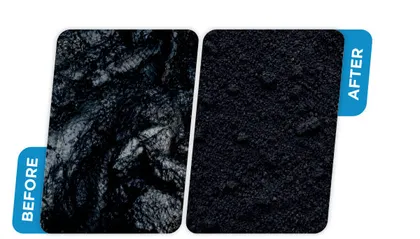
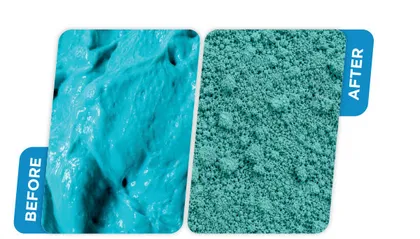
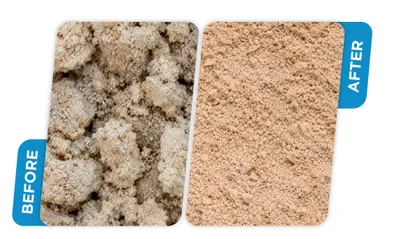
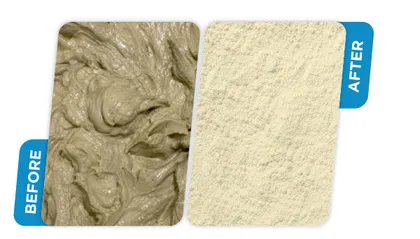
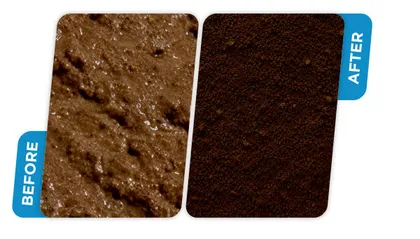
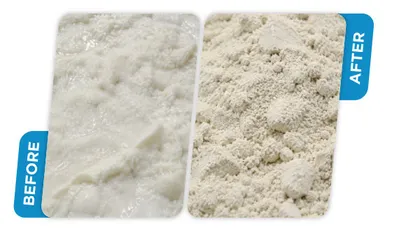
Real samples. Before and after our dryer.
Sludge, pigments, salts and minerals dried on AS Engineers paddle dryers.
Design to execution
One team, from your first call to the last spare part
1EnquiryYou share material, quantity and moisture.
2Pilot trialWe dry your sample on our 25 kg/hr dryer.
3DesignOur engineers size the dryer and the full plant.
4ManufactureWe build in-house at Vatva, Ahmedabad.
5InstallWe erect the plant at your site.
6CommissionWe start up, tune and train your team.
7Service for lifeSpares, AMC, retrofits and on-site support.
Built in Ahmedabad. Running across India.
See our dryers from every angle
Real AS Engineers machines – drag to rotate.
Drag to rotate · arrow keys work too
Compare
Paddle drying vs. drying beds and dewatering
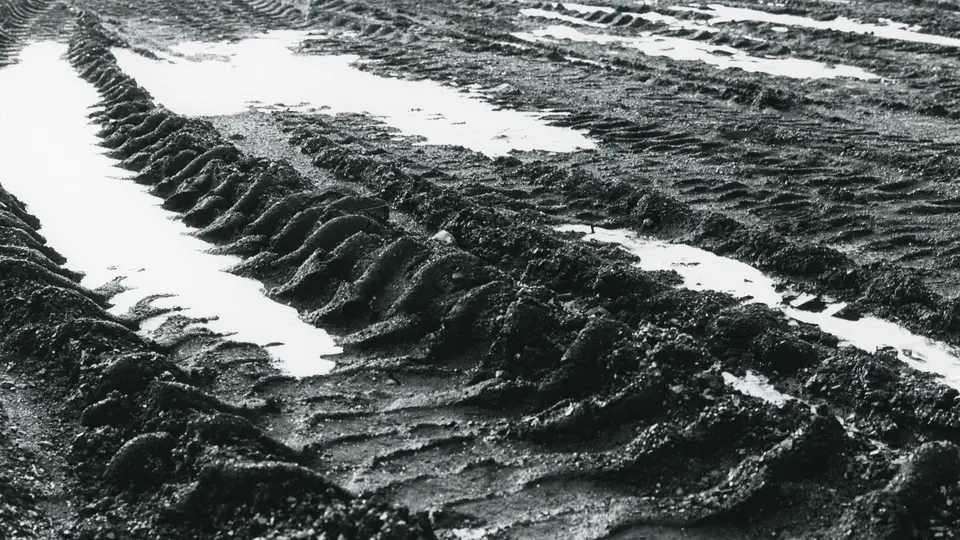
The usual wayDrying beds / dewatering onlyWeeks in an open yard – and nothing dries in the monsoonVSThe AS Engineers wayAS Engineers paddle dryerHours, not weeks – enclosed, automatic, any weather
8/8The paddle dryer wins on every count – see it happen with your own sludge.Book a pilot trial
FAQ
Technical questions, answered
How does an indirect paddle dryer work?
Steam, thermic fluid or hot water flows through the hollow shafts, paddles and jacket. Heat passes through the metal into the material – the heating medium never touches it. Intermeshing paddles knead, break lumps and push the material in plug flow from feed to discharge; a small purge carries vapour to a cyclone and scrubber or condenser.
What inlet and outlet moisture can it handle?
Inlet 40–85% (w/w) is typical. Outlet is adjustable – commonly 5–15%, around 20% for fuel-grade sludge, and 1–2% for specific applications.
Which heating media can be used?
Steam up to 14.06 kg/cm², thermic fluid up to 400°C, or hot water. The heating system can be fired by natural gas, wood, coal, LDO, briquettes or electricity.
Why indirect rather than direct (hot-gas) drying?
Off-gas is only about 2–5% of the sludge mass, so exhaust treatment is small. With low airflow and oxygen exposure, dust and explosion risk are lower, and there is no combustion-gas contamination.
What materials of construction are available?
Contact parts in SS 304, SS 316 or Duplex 2205; shell and jacket in carbon steel, SS 304 or SS 316; buffing, hard facing and electropolishing for abrasive, corrosive or hygienic duty.
Can it run under vacuum or pressure, with solvent recovery?
Yes – atmospheric, vacuum or pressurised, and a fully enclosed, purged configuration for solvent recovery.
Get a paddle dryer sized for your plant
Tell us your material, quantity and moisture. We send back the configuration, heating medium and payback.